
I am firmly in favor of European digital sovereignty. But how sovereign is our PLM/ALM toolchain, actually?
These systems hold design data, software, bills of materials (BOMs) and architecture models — in other words, the core of industrial DNA and a substantial amount of intellectual property. At the same time, more and more solutions are moving to cloud models.
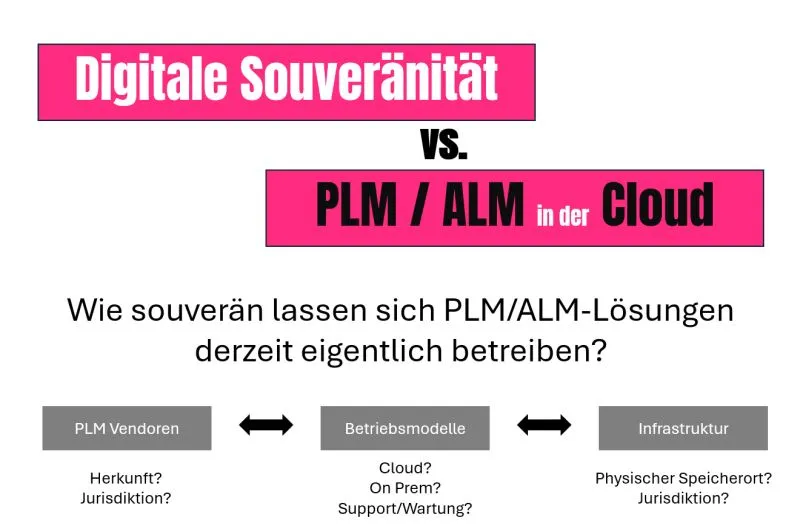
So the question is: how sovereignly can PLM/ALM realistically be operated today?
Over the coming weeks I will dig deeper into this. Among other things, I am interested in:
- Which jurisdiction do the major PLM/ALM vendors fall under?
- Which operating models are offered (cloud, on-prem, hybrid)?
- Which infrastructures run technically in the background?
- Where is the data physically located?
- And which jurisdiction do the infrastructure providers fall under?
I am convinced that these are increasingly no longer academic questions, but hard governance and compliance issues.
Digital sovereignty in the PLM/ALM space is more than a buzzword — it touches jurisdiction, operating model and infrastructure alike. In the following posts of this series, I will go through the individual dimensions step by step.